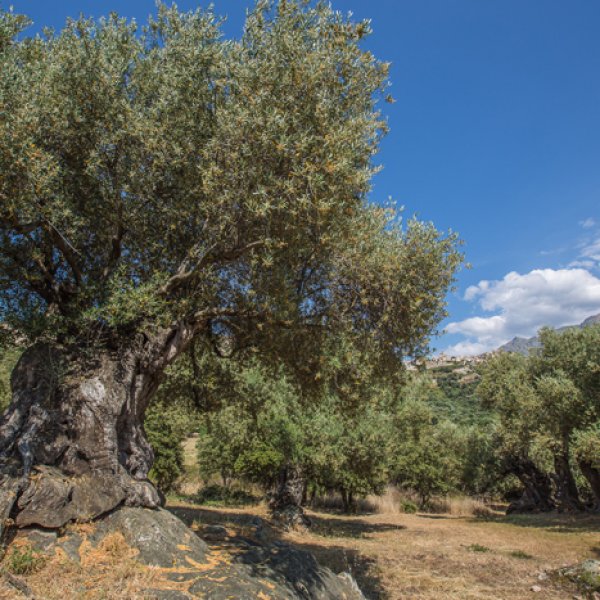
Huile d'olive de Corse - Oliu di Corsica - récolte à l'ancienne PDO
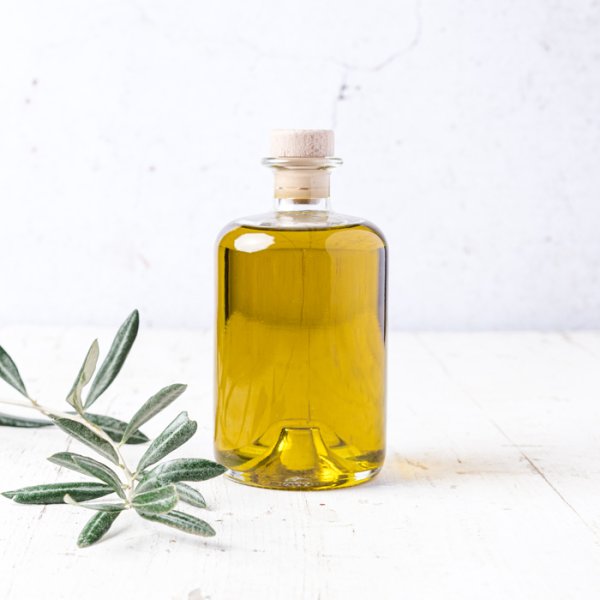

This olive oil is one of Corsica’s two traditional specialities. ‘Récolte à l'ancienne’ (traditional harvest) refers to the age-old practice of allowing the fruit to fall naturally once it has reached full ripeness. The traditional harvest method in Corsica is now listed on the national register of intangible cultural heritage.
What does Huile d'olive de Corse – Oliu di Corsica – récolte à l'ancienne PDO taste like?
The PDO huile d'olive de Corse – Oliu di Corsica, followed by the words ‘récolte à l'ancienne’ (harvested using traditional methods) – is round and full-bodied on the palate, with very little bitterness or pungency. The characteristic and dominant aromas that can be detected are: black olives, dry hay, nuts (almonds, walnuts, hazelnuts), floral scents of the maquis, mushrooms and undergrowth.
The ‘goût maturé’ (traditional taste) family of olive oils is the one that best matches the flavour characteristics of this huile d'olive de Corse - Oliu di Corsica – récolte à l'ancienne PDO, but these olives are not ‘matured’ in the usual sense of the term, as they are not stored at the mill.
The Huile d'olive de Corse – Oliu di Corsica – récolte à l'ancienne PDO varieties
The olive oils are produced from varieties that are often endemic to Corsica: Sabine (also known as Aliva Bianca or Biancaghja), Ghjermana, Capanace, Raspulada, Zinzala, Aliva Néra (also known as Ghjermana du Sud) and Curtinese.
Within each olive grove, the planting of olive trees of pollinator varieties is permitted (up to 5 per cent).
Of the 2,100 hectares of olive groves under cultivation, 1,300 hectares consist of old groves with trees dating back several centuries, spread across the whole island.
Olive harvesting for Huile d'olive de Corse – Oliu di Corsica – récolte à l'ancienne PDO
Olive oil produced using the ‘traditional harvest’ (récolte à l'ancienne) method is made from olives harvested by the natural fall method, onto nets, once they have reached full ripeness. This practice is mainly used in orchards of old olive trees.
From November to May
Extraction of Huile d'olive de Corse – Oliu di Corsica – récolte à l'ancienne PDO
The extraction process comprises the following stages: leaf stripping, washing, crushing, mixing, extraction by centrifugation or pressing, decanting, centrifugation and filtration.
By the numbers
Specifications
Specifications - Oliu di Corsica olive oil PDOHow to cook with Huile d'olive de Corse – Oliu di Corsica – récolte à l'ancienne PDO
The PDO huile d'olive de Corse - Oliu di Corsica - récolte à l'ancienne goes very well with hot dishes: a few drops in a soup or over mashed potatoes instantly add a touch of refinement to even the simplest of dishes.
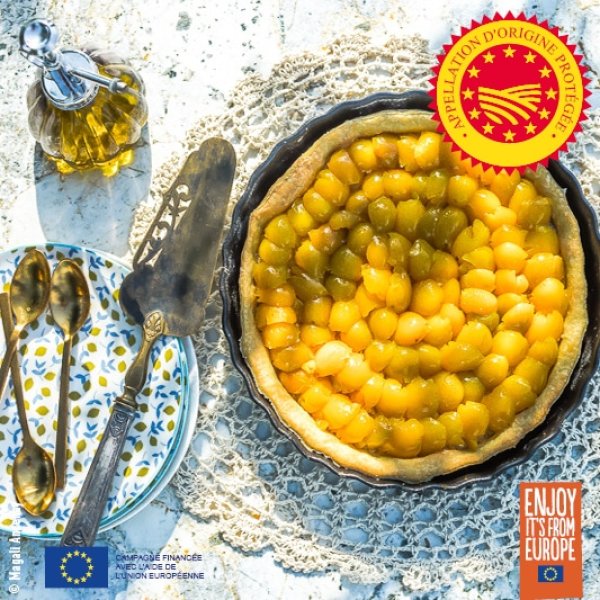
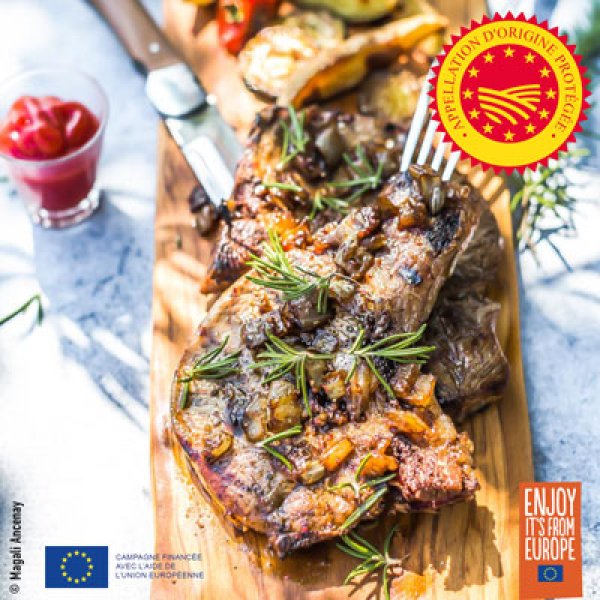
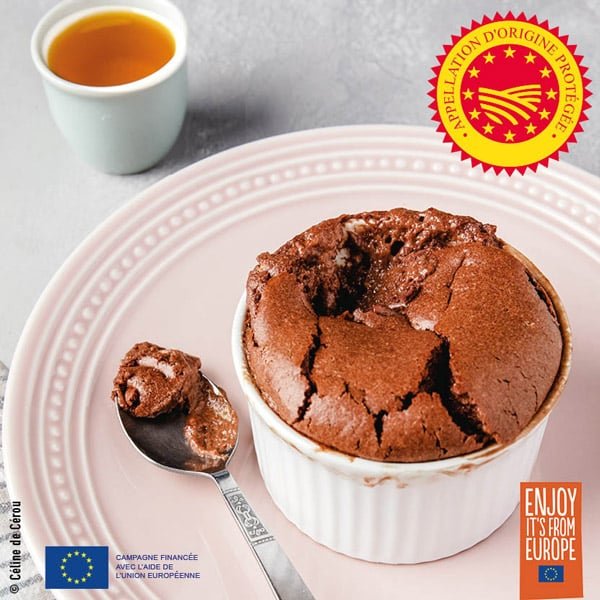
Discover Huile d'olive de Corse - Oliu di Corsica PDO
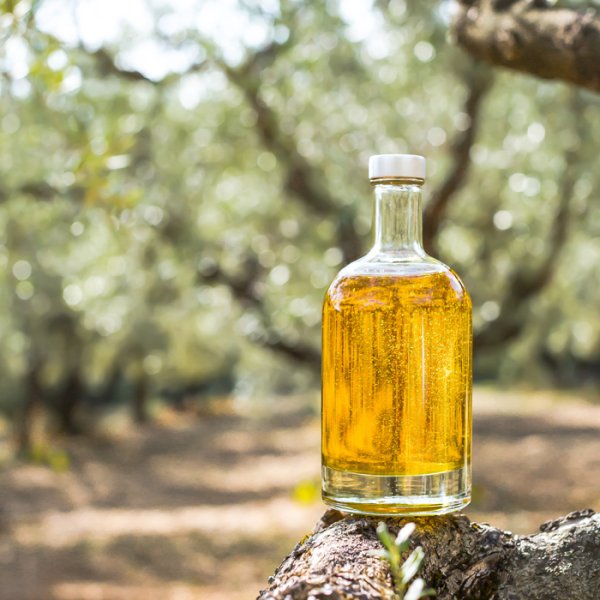
Discover the terroir of Corse - Oliu di Corsica